Furniture and display glazing

Glass cabinet doors and inserts

Replace a framed cabinet insert or request a complete glass furniture door with the hinge, latch and edge details recorded.

Product guide

Glass cabinet doors and inserts

Replace a framed cabinet insert or request a complete glass furniture door with the hinge, latch and edge details recorded.

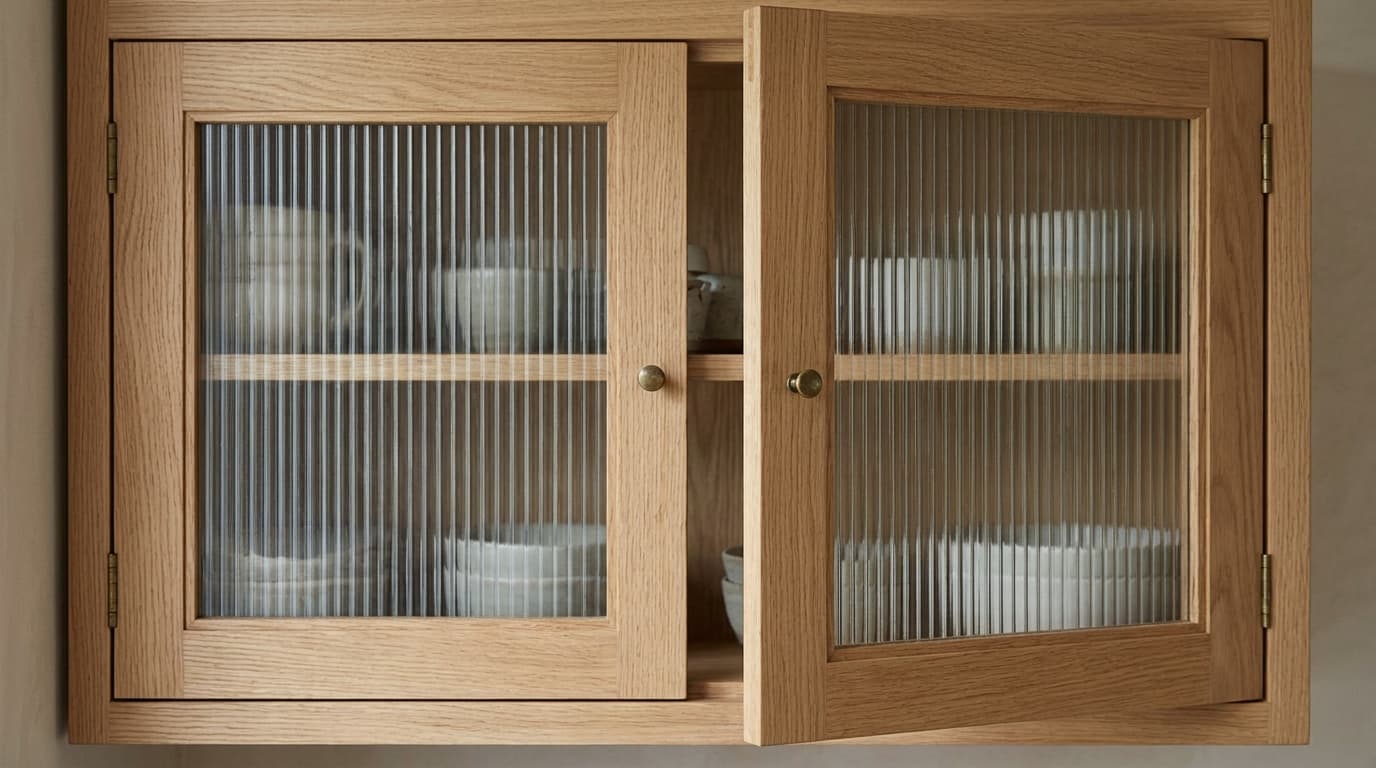
Oak cabinet doors containing framed reeded-glass inserts and small brass knobs.
AI-generated illustration. Appearance varies by specification; this is not an exact product sample.

Glass cabinet doors and inserts: design and installation choices

Replace a framed cabinet insert or request a complete glass furniture door with the hinge, latch and edge details recorded.

Furniture glazing can be a replacement pane held inside a timber frame or a moving glass door with exposed edges. Identify which is being replaced and photograph the existing fixings.

Patterned, frosted and tinted inserts alter the view of the contents. Confirm safety processing and finish compatibility for kitchens, bedrooms and commercial displays.

Measurement reference

Enter finished glass sizes only after the rebate and fitting clearance are agreed. Request a survey if only the opening is known.

Budget and optional extras

The reference covers glass material. Hinges, locks, cut-outs, framing and finished furniture are additional.

Published prices on the main page state their reference size, supply or fitting scope, VAT basis and source. Add-ons are individually requested in the configurator and need separate supplier pricing.

Glass cabinet doors and inserts for your project

Common enquiry briefs include kitchen cabinet insert, display cabinet door, bookcase glazing, wardrobe glass insert. Describe the intended use and the supporting construction so the supplier can assess the complete specification. Different applications can need different glass processing, fixings and installation details.

An insert is not a complete door

A glass insert sits inside furniture framing. An all-glass door needs its own compatible hinges and catches.

Record the pattern direction

Reeded and other directional patterns should align across adjacent doors; provide a simple elevation.

What to include in a made-to-measure quote

Compare quotes using the same dimensions, quantities, finish, glass construction and installation scope. If you have a drawing or an existing specification, include its reference and identify which details still need advice.

  • Door construction: A framed insert and an all-glass door have different fittings.
  • Thickness request: Check the rebate, hinge capacity and door weight.
  • Glass appearance: Ask for a physical sample where colour or privacy matters.
  • Edge finish: Identify exposed and concealed edges on the drawing.
  • Hinges / pivot fittings: Provide the hardware model and machining template.
  • Handles and catches: Specify lock, magnetic catch or finger pull.
  • Holes, notches and templates: Give counts, positions and drawing references in the notes. Agree all processing before toughening.
  • Decorative glass: Choose a sample and confirm any pattern direction.
  • What should the quote include?: Ask suppliers to itemise delivery, measurement and fitting separately.

Cut-to-size dimensions, edges and fabrication

Measure the finished glass only when the fitting allowances and support details are known. Otherwise identify the opening or existing panel you measured and request a survey. Give each different size its own basket line, with its quantity and drawing reference.

Holes, cut-outs, shaped edges and interfaces with hardware should be settled before manufacture. The finished glass construction and any coatings must suit the intended environment. A screen preview or concept photograph cannot replace a sample, survey or product-specific installation drawing.

Supplier checks before manufacture

  • Match the original rebate and retainers. Hardware must suit panel thickness and finished door weight.
  • The supplier must agree the final sizes, construction and compatible fittings before manufacture.
  • Confirm survey, packaging, delivery, access and installation responsibilities in the written quote.
Requesting comparable glass quotes

Save the choices you know and ask for help with the rest. The quote basket records a specification request rather than placing a manufacturing order. A firm quote needs an agreed final build, dimensions, delivery arrangements and any installation or design work.

When comparing proposals, check that glass-only supply and supply with fitting cover the same scope. Ask who provides measurement, drawings, supports, compatible hardware, lifting access and finishing work. Keep the final approved specification with the order.

Sources and further reading

Guided specification · Save multiple sizes · Supplier-confirmed quotes

Oak cabinet doors containing framed reeded-glass inserts and small brass knobs.
AI-generated illustration created in Google Flow. A design concept, not a completed customer installation, exact product sample or proof of performance.

Designed around your project

Know what you are specifying

Furniture glazing can be a replacement pane held inside a timber frame or a moving glass door with exposed edges. Identify which is being replaced and photograph the existing fixings.

Patterned, frosted and tinted inserts alter the view of the contents. Confirm safety processing and finish compatibility for kitchens, bedrooms and commercial displays.

See indicative prices ↓

Plan your budget

What might it cost?

Published supplier examples give a starting point. Each reference below has its own size, inclusions and VAT basis. These are indicative third-party prices, not Glass Suppliers prices or a quote for your configuration.

The reference covers glass material. Hinges, locks, cut-outs, framing and finished furniture are additional.

Ask for itemised glass, processing, hardware, measurement, delivery, removal, installation and VAT. Optional extras are requests for separate pricing; they are not automatically added to these reference figures.

Your glass, step by step

Build your specification

Choose what you know. Leave the rest for a supplier to advise. Add different sizes as separate basket lines.

No account needed to configure
1. Your project

1What are you making?

2. Glass and performance

2Choose the details

Examples and guidanceSingle-pane glass thickness and processing

A framed insert and an all-glass door have different fittings.

Monolithic glass sectionOne solid glass pane with thickness measured between its two faces.Door constructionIllustrative schematic, not to scale or a fabrication / fixing specification.

What your choice means

A monolithic pane is one piece of glass. Its thickness is measured between its two faces; toughening changes the glass’s stress state rather than adding a separate layer.

The suitable thickness depends on use, size and support. Specify safety requirements separately. Cutting, drilling and edge preparation must be agreed before any toughening; finished toughened glass cannot be recut.

Examples you may seeAn 8 mm request describes the single pane, subject to supplier confirmation.A supported furniture panel and an unsupported span need different design checks.Available choices: Help me choose; Glass insert in an existing frame; All-glass hinged door; Sliding cabinet panels.Current choice: Help me choose. This is your request for the supplier to confirm.Oak cabinet doors containing framed reeded-glass inserts and small brass knobs.AI-generated product illustration from Google Flow; not an exact product sample, completed installation or proof of performance.Guardian: glass types (opens in a new tab) ↗

A framed insert and an all-glass door have different fittings.

Examples and guidanceSingle-pane glass thickness and processing

Check the rebate, hinge capacity and door weight.

Monolithic glass sectionOne solid glass pane with thickness measured between its two faces.Thickness requestIllustrative schematic, not to scale or a fabrication / fixing specification.

What your choice means

A monolithic pane is one piece of glass. Its thickness is measured between its two faces; toughening changes the glass’s stress state rather than adding a separate layer.

The suitable thickness depends on use, size and support. Specify safety requirements separately. Cutting, drilling and edge preparation must be agreed before any toughening; finished toughened glass cannot be recut.

Examples you may seeAn 8 mm request describes the single pane, subject to supplier confirmation.A supported furniture panel and an unsupported span need different design checks.Available choices: Help me choose; 4 mm; 6 mm; 8 mm.Current choice: Help me choose. This is your request for the supplier to confirm.Oak cabinet doors containing framed reeded-glass inserts and small brass knobs.AI-generated product illustration from Google Flow; not an exact product sample, completed installation or proof of performance.Guardian: glass types (opens in a new tab) ↗

Check the rebate, hinge capacity and door weight.

Examples and guidanceAppearance and a physical sample

Ask for a physical sample where colour or privacy matters.

Appearance sample comparisonThree illustrative colour samples, not an exact product or privacy demonstration.Glass appearanceIllustrative schematic, not to scale or a fabrication / fixing specification.

What your choice means

Clear, low-iron, tinted, satin and decorative finishes alter transmitted light and appearance in different ways. Screen illustrations cannot establish the actual colour, privacy or surface texture.

Request a sample of the named product in the proposed thickness and finish. Agree which face is exposed and the orientation of any directional treatment before manufacture.

Examples you may seeCompare the sample beside neighbouring panels.Confirm the exact product name and finish, rather than a colour description alone.Available choices: Help me choose; Clear; Low-iron / extra clear; Grey tint; Bronze tint; Satin / frosted.Current choice: Help me choose. This is your request for the supplier to confirm.Oak cabinet doors containing framed reeded-glass inserts and small brass knobs.AI-generated product illustration from Google Flow; not an exact product sample, completed installation or proof of performance.Guardian: glass types (opens in a new tab) ↗

Ask for a physical sample where colour or privacy matters.

Examples and guidanceEdges, holes and fabrication drawing

Identify exposed and concealed edges on the drawing.

Fabrication drawing conceptsFront elevation concepts with hole centres and a decorative bevel. Confirm the hardware drawing and processing limits.Edge finishIllustrative schematic, not to scale or a fabrication / fixing specification.

What your choice means

Identify every exposed edge, hole, notch and corner radius on a dimensioned drawing. Edge polishing and bevel width are different details from the panel outline.

Match the drawing to the exact hardware. The fabricator confirms minimum edge distances and processing limits; an educational diagram is not a drilling template. Complete processing before any heat treatment.

Examples you may seeMark hole centres from a consistent datum.Label visible polished edges and concealed edges separately.Available choices: Help me choose; Flat polished; Bevelled; Concealed edges — supplier to advise.Current choice: Help me choose. This is your request for the supplier to confirm.Oak cabinet doors containing framed reeded-glass inserts and small brass knobs.AI-generated product illustration from Google Flow; not an exact product sample, completed installation or proof of performance.Guardian: glass types (opens in a new tab) ↗

Identify exposed and concealed edges on the drawing.

Examples and guidanceItemised scope for this product

Ask suppliers to itemise delivery, measurement and fitting separately.

Numbered specification scheduleA numbered schedule separates panel specification, hardware, delivery, fitting and approvals.What should the quote include?Illustrative schematic, not to scale or a fabrication / fixing specification.

What your choice means

Use an itemised quote to separate the product, fabrication, hardware, survey, delivery and installation. Identify work by others and drawing approvals before manufacture.

An optional accessory request does not establish its compatibility with the proposed product. Ask the supplier to confirm the named part, included quantities and any installation requirements.

Examples you may seeSupply only: identify delivery and hardware inclusions.Survey and fitting: identify who confirms final sizes and the supporting construction.Available choices: Help me choose; Glass / product supply only; Supply and installation; Survey, supply and installation.Current choice: Help me choose. This is your request for the supplier to confirm.Oak cabinet doors containing framed reeded-glass inserts and small brass knobs.AI-generated product illustration from Google Flow; not an exact product sample, completed installation or proof of performance.Guardian: glass types (opens in a new tab) ↗

Ask suppliers to itemise delivery, measurement and fitting separately.

Optional add-ons

Make it work for you

Choose optional extras independently. They are saved with this product and passed to suppliers for compatibility checks and itemised pricing.

Examples and guidanceEdges, holes and fabrication drawing

Provide the hardware model and machining template.

Fabrication drawing conceptsFront elevation concepts with hole centres and a decorative bevel. Confirm the hardware drawing and processing limits.Hinges / pivot fittingsIllustrative schematic, not to scale or a fabrication / fixing specification.

What your choice means

Identify every exposed edge, hole, notch and corner radius on a dimensioned drawing. Edge polishing and bevel width are different details from the panel outline.

Match the drawing to the exact hardware. The fabricator confirms minimum edge distances and processing limits; an educational diagram is not a drilling template. Complete processing before any heat treatment.

Examples you may seeMark hole centres from a consistent datum.Label visible polished edges and concealed edges separately.Available choices: Help me choose; Reuse existing; New glass-door hinges; Pivot fittings.Current choice: Help me choose. This is your request for the supplier to confirm.Oak cabinet doors containing framed reeded-glass inserts and small brass knobs.AI-generated product illustration from Google Flow; not an exact product sample, completed installation or proof of performance.Guardian: glass types (opens in a new tab) ↗

Provide the hardware model and machining template.

Examples and guidanceEdges, holes and fabrication drawing

Specify lock, magnetic catch or finger pull.

Fabrication drawing conceptsFront elevation concepts with hole centres and a decorative bevel. Confirm the hardware drawing and processing limits.Handles and catchesIllustrative schematic, not to scale or a fabrication / fixing specification.

What your choice means

Identify every exposed edge, hole, notch and corner radius on a dimensioned drawing. Edge polishing and bevel width are different details from the panel outline.

Match the drawing to the exact hardware. The fabricator confirms minimum edge distances and processing limits; an educational diagram is not a drilling template. Complete processing before any heat treatment.

Examples you may seeMark hole centres from a consistent datum.Label visible polished edges and concealed edges separately.Available choices: Help me choose; Not required; Handle / knob; Finger pull; Lock and catch.Current choice: Help me choose. This is your request for the supplier to confirm.Oak cabinet doors containing framed reeded-glass inserts and small brass knobs.AI-generated product illustration from Google Flow; not an exact product sample, completed installation or proof of performance.Guardian: glass types (opens in a new tab) ↗

Specify lock, magnetic catch or finger pull.

Examples and guidanceEdges, holes and fabrication drawing

Give counts, positions and drawing references in the notes. Agree all processing before toughening.

Fabrication drawing conceptsFront elevation concepts with hole centres and a decorative bevel. Confirm the hardware drawing and processing limits.Holes, notches and templatesIllustrative schematic, not to scale or a fabrication / fixing specification.

What your choice means

Identify every exposed edge, hole, notch and corner radius on a dimensioned drawing. Edge polishing and bevel width are different details from the panel outline.

Match the drawing to the exact hardware. The fabricator confirms minimum edge distances and processing limits; an educational diagram is not a drilling template. Complete processing before any heat treatment.

Examples you may seeMark hole centres from a consistent datum.Label visible polished edges and concealed edges separately.Available choices: Help me choose; None; Drilled holes — drawing to follow; Notches / cut-outs — drawing to follow; Template and several details — see notes.Current choice: Help me choose. This is your request for the supplier to confirm.Oak cabinet doors containing framed reeded-glass inserts and small brass knobs.AI-generated product illustration from Google Flow; not an exact product sample, completed installation or proof of performance.Guardian: glass types (opens in a new tab) ↗

Give counts, positions and drawing references in the notes. Agree all processing before toughening.

Examples and guidanceAppearance and a physical sample

Choose a sample and confirm any pattern direction.

Appearance sample comparisonThree illustrative colour samples, not an exact product or privacy demonstration.Decorative glassIllustrative schematic, not to scale or a fabrication / fixing specification.

What your choice means

Clear, low-iron, tinted, satin and decorative finishes alter transmitted light and appearance in different ways. Screen illustrations cannot establish the actual colour, privacy or surface texture.

Request a sample of the named product in the proposed thickness and finish. Agree which face is exposed and the orientation of any directional treatment before manufacture.

Examples you may seeCompare the sample beside neighbouring panels.Confirm the exact product name and finish, rather than a colour description alone.Available choices: Help me choose; Not required; Reeded / patterned; Back-painted; Printed design.Current choice: Help me choose. This is your request for the supplier to confirm.Oak cabinet doors containing framed reeded-glass inserts and small brass knobs.AI-generated product illustration from Google Flow; not an exact product sample, completed installation or proof of performance.Guardian: glass types (opens in a new tab) ↗

Choose a sample and confirm any pattern direction.

3. Sizes and fabrication notes

3Size and quantity

Enter finished glass sizes only after the rebate and fitting clearance are agreed. Request a survey if only the opening is known.

Examples and guidancePanel outline and drawing

Choose the finished outline. A rectangle needs width and height; a circle needs diameter. Bespoke shapes need enough dimensions, radii and datum references to define the outline.

Panel dimension referenceFinished rectangular panel width and height. Opening dimensions are a different reference.ShapeIllustrative schematic, not to scale or a fabrication / fixing specification.

What your choice means

A preview is an illustration; ask the supplier to confirm the manufacturing drawing or template.

Examples you may seeRectangle or square: finished width and height.Circle: diameter, with hole or cut-out positions separately documented.Available choices: Rectangle; Shaped / drawing to follow.Oak cabinet doors containing framed reeded-glass inserts and small brass knobs.AI-generated product illustration from Google Flow; not an exact product sample, completed installation or proof of performance.Guardian: glass types (opens in a new tab) ↗
Examples and guidanceMeasurement units

1 cm equals 10 mm. Choose the units before entering sizes; keep drawing annotations in the same units.

Panel dimension referenceFinished rectangular panel width and height. Opening dimensions are a different reference.Measurement unitsIllustrative schematic, not to scale or a fabrication / fixing specification.

What your choice means

The form converts entered measurements to the existing millimetre specification fields.

Examples you may see120 cm = 1,200 mm.60 cm = 600 mm.Available choices: Millimetres (mm); Centimetres (cm).Oak cabinet doors containing framed reeded-glass inserts and small brass knobs.AI-generated product illustration from Google Flow; not an exact product sample, completed installation or proof of performance.Guardian: glass types (opens in a new tab) ↗
Examples and guidanceFinished panel dimensions

Record the finished width and height of each distinct panel. For a circle use its diameter; shaped work needs a dimensioned drawing or agreed template.

Panel dimension referenceFinished rectangular panel width and height. Opening dimensions are a different reference.Width ( mm )Illustrative schematic, not to scale or a fabrication / fixing specification.

What your choice means

An opening, frame and finished glass are different references. Request a survey when the finished manufacturing dimensions remain unknown.

Examples you may seeOne size per basket line; quantity records identical pieces.Check units and the dimension reference before confirming manufacture.Oak cabinet doors containing framed reeded-glass inserts and small brass knobs.AI-generated product illustration from Google Flow; not an exact product sample, completed installation or proof of performance.Guardian: glass types (opens in a new tab) ↗
Examples and guidanceFinished panel dimensions

Record the finished width and height of each distinct panel. For a circle use its diameter; shaped work needs a dimensioned drawing or agreed template.

Panel dimension referenceFinished rectangular panel width and height. Opening dimensions are a different reference.Height ( mm )Illustrative schematic, not to scale or a fabrication / fixing specification.

What your choice means

An opening, frame and finished glass are different references. Request a survey when the finished manufacturing dimensions remain unknown.

Examples you may seeOne size per basket line; quantity records identical pieces.Check units and the dimension reference before confirming manufacture.Oak cabinet doors containing framed reeded-glass inserts and small brass knobs.AI-generated product illustration from Google Flow; not an exact product sample, completed installation or proof of performance.Guardian: glass types (opens in a new tab) ↗
Examples and guidanceQuantity of identical pieces

Quantity counts pieces with the same size and specification. Enter different sizes or constructions as separate basket lines so each requirement is retained.

Numbered specification scheduleA numbered schedule separates panel specification, hardware, delivery, fitting and approvals.QuantityIllustrative schematic, not to scale or a fabrication / fixing specification.

What your choice means

Examples you may seeThree identical panels: quantity 3.Two distinct sizes: separate lines.Oak cabinet doors containing framed reeded-glass inserts and small brass knobs.AI-generated product illustration from Google Flow; not an exact product sample, completed installation or proof of performance.Guardian: glass types (opens in a new tab) ↗
Examples and guidanceDrawing references and unresolved details

Record drawing references, site conditions and requirements not captured in the choices. Identify anything that needs a survey or supplier confirmation before manufacture.

Numbered specification scheduleA numbered schedule separates panel specification, hardware, delivery, fitting and approvals.Project and fabrication notesIllustrative schematic, not to scale or a fabrication / fixing specification.

What your choice means

Examples you may seeNumber drawings and panel positions consistently.State access constraints and the requested work scope.Oak cabinet doors containing framed reeded-glass inserts and small brass knobs.AI-generated product illustration from Google Flow; not an exact product sample, completed installation or proof of performance.Guardian: glass types (opens in a new tab) ↗

0/2000 characters. Share drawings and photos in the job conversation after submitting.

Before you choose

The decisions that matter

01

An insert is not a complete door

A glass insert sits inside furniture framing. An all-glass door needs its own compatible hinges and catches.

02

Record the pattern direction

Reeded and other directional patterns should align across adjacent doors; provide a simple elevation.

Ready for a useful supplier quote

  • Match the original rebate and retainers. Hardware must suit panel thickness and finished door weight.
  • The supplier must agree the final sizes, construction and compatible fittings before manufacture.
  • Confirm survey, packaging, delivery, access and installation responsibilities in the written quote.

Research behind these choices

Reviewed 23 October 2026. Manufacturer guidance and supplier ordering pages inform these design questions. Agree the final construction and project requirements with your supplier.

Related project products

Useful questions

Can I get a quote before I know every detail?

Yes. Choose Help me choose where you need advice, or request a site measurement. Suppliers can review the brief; a firm manufacturing price needs an agreed final specification.

Does adding a panel place an order?

No. It saves a specification in your quote basket. Review the basket and provide your delivery details to request supplier quotes. Your configuration does not approve the product for installation.

What should I confirm for furniture and display glazing?

Match the original rebate and retainers. Hardware must suit panel thickness and finished door weight. The supplier must agree the final sizes, construction and compatible fittings before manufacture. Confirm survey, packaging, delivery, access and installation responsibilities in the written quote.

Compare related glass